

Key dates
- 1829Ward observes plants and circulating moisture in a covered bottle.12
- 1833Two planted cases are sent from England to Sydney.1
- 1834Replanted cases return from Australia with living plants.1
- 1842The first edition of Ward’s book on cultivation in glazed cases appears.21
- 1924The USDA highlights risks from moving plants in soil and Wardian cases.6
- 1962Kew’s last used Wardian case brings plants from Fiji.4
Living cargo in the age of sail
Moving a living plant presented a different challenge from transporting grain intended for consumption. Propagating material had to retain the capacity for further growth. On a lengthy voyage, foliage could suffer from salt spray and drying; moving it below deck might deprive it of light instead. Fresh water belonged to the ship’s limited supplies, while tending pots competed with other duties. A telling entry survives in Kew’s records for 1793: baskets of plants sent from Penang arrived dead.
Ward distinguished two basic strategies: keeping material dormant and maintaining growth during the journey. Some trees and shrubs could be packed in moss after their active season; other plants needed light and a moist atmosphere. The case did not replace every earlier packing method. It addressed the particularly difficult problem of plants that could not simply be dried and put away in the hold. Its history consequently belongs to commercial nurseries as well as to the movement of crops requiring living seedlings.14
A London observation in 1829
Nathaniel Bagshaw Ward was a physician with a strong interest in botany. His attempts to grow ferns in smoky London had ended in failure. In the summer of 1829 he placed a moth chrysalis in a covered bottle containing damp soil. He noticed moisture condensing on the glass and returning to the ground. A fern and a grass then appeared. What had begun as an observation of an insect became an experiment in the environment surrounding a plant and the possibility of maintaining that environment over time.
In Ward’s account, the plants remained in the bottle for several years without ordinary attention; excessive rainwater eventually destroyed them after the lid rusted. Their survival had depended on limiting disturbance, rather than abolishing their biological needs. He subsequently experimented with other ferns and different enclosures. Glass containers and earlier attempts to ship plants already existed. His important contribution lay in systematic trials, publication and demonstrating that this form of protection could work on a voyage.123
Sydney: testing the method in both directions
In 1833 Ward sent two glazed cases containing plants to Sydney under Captain Charles Mallard’s care. This went beyond a demonstration inside a house: the cargo had to withstand a moving vessel and changing maritime conditions. In Australia the cases were replanted in February 1834 and returned to England. Ward recorded that they remained on deck and were not watered during the return passage. Living plants arriving back provided a stronger argument for the method’s practical value than successful cultivation under glass at home alone.
Ward inspected the shipment with George Loddiges, associated with the London nursery business. Their interest connects experiment with commerce: a dependable method could serve scientific collections and firms seeking plants for sale. Ward’s narrative enthusiastically describes the condition of the arrival, but it should not be converted into a universal survival percentage. The outcome of a particular voyage depended on the plants selected, the preparation of the case, the season and the attention of its handlers. Repeating a successful passage required a procedure, not merely another box.123
Preparing a case for the journey
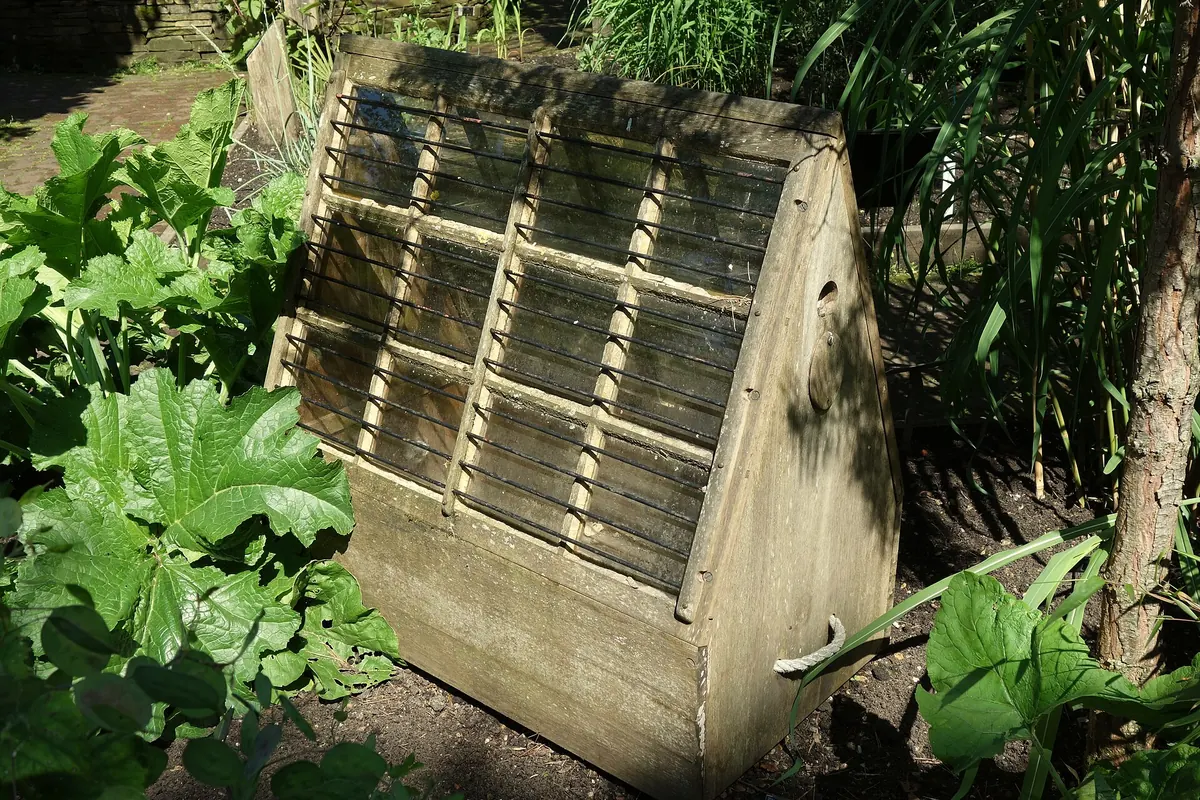
Glazing admitted light, limited moisture loss and shielded plants from salt water and other contaminants. Ward’s book devoted considerable attention to preparation: frames were to be painted and puttied in advance, while surplus water needed to drain from the soil before closure. Saturated ground could be as problematic as drying. The objective was not luxuriant growth at sea but the preservation of healthy material capable of continuing cultivation on arrival.
Ward also recommended grouping plants with similar growth rates, so that vigorous individuals would not deprive slower neighbours of light. Seeds that quickly lost viability could be sown directly in the soil and germinate in transit. He warned that tropical plants might succumb to prolonged cold even after successfully crossing an ocean. Later cases incorporated different forms of protection and ventilation. The term Wardian case therefore covers a family of practical designs; every historical example was not an identical, completely airtight vessel. The principle needed adaptation to the cargo, the route and the circumstances of use.14
Publication, domestic gardening and circulating knowledge
Spreading the method required explaining why it worked and why it sometimes failed. Ward reported his results in periodicals, and William Jackson Hooker published an account in 1836. The first edition of On the Growth of Plants in Closely Glazed Cases appeared in 1842, followed by an expanded second edition in 1852. In his preface Ward described misunderstandings he hoped to correct. The book combined personal observations with correspondence from other experimenters, assembling evidence beyond a single household or laboratory.
The same principle supported cultivation in homes and small gardens. Ward discussed containers of different sizes and the adjustment of conditions to particular plants. Light, moisture and periods of rest mattered; treating every species alike was not the aim. Ornamental cases also became part of fern collecting. Publications and illustrations allowed readers to compare constructions, while horticultural knowledge moved between amateurs, physicians, businesses and institutions. Maritime transport and domestic gardening developed around a shared concern with maintaining conditions.125
Networks of people mattered as much as glass walls
A case had to be built, planted, taken aboard, handled in ports and received at its destination. Luke Keogh’s archival research also shows the importance of reciprocity between gardens: sending plants could establish contacts and encourage further exchanges. In 1873 Charles Sprague Sargent dispatched ferns to Kew in the hope that some material could continue to Paris. The consignment also carried requests and an expectation of response.
Institutions also specified the information required to make a consignment useful. A USDA circular of 1924 requested names, collection place and date, and the collector’s identity; information about uses and cultivation was valuable too. A living specimen without documentation might prove far less useful. The document makes the labour of gardeners and packers visible: they assessed material, adjusted moisture and protected roots. Galloway even stressed how difficult it was to convey the feel of appropriately damp moss to a beginner. Successful transfer combined that skill with records that could travel separately from the packers.136
Commercial crops, empire and unequal benefits
Ward reproduced a letter from Robert Fortune describing the transport of tea plants from Shanghai to the Himalayas for the East India Company. For the history of the case, the central point is the delivery of material that could subsequently be propagated and tested elsewhere. A voyage did not automatically create a productive plantation. Suitable ground, cultivation knowledge, work in propagation and the ability to process a crop remained necessary. Successful packing was one stage in a much longer agricultural undertaking.
Much of this circulation developed within colonial relationships. Botanic gardens, companies and administrations used the ability to move economic plants between territories. Historical assessment must distinguish the survival of a seedling from the social consequences of its later cultivation. Control over shipping and finance differed from the work of maintaining plants at both ends of a route. Ward’s enthusiastic language about benefits to the ‘civilized world’ reveals the viewpoint of someone benefiting from exchange. His celebration cannot, on its own, assess the outcome for every participating community.17
The cargo also included uninvited travellers
Living plants and their soil could carry other organisms. In his 1924 circular Galloway identified insects, nematodes and plant diseases as risks in international exchange. He was particularly critical of shipping soil around roots and of Wardian cases. The document described inspection and quarantine, and presented packing or growing plants in moss among the alternatives. The historical change was substantial: transport was being judged not simply by the plants kept alive, but also by its possible effects on agriculture at the receiving end. Preserving a miniature environment could protect wanted and unwanted organisms together.
Cases gradually gave way to other packing materials and faster transport. According to Kew’s records, its last used case brought plants from Fiji in 1962; that is an institutional milestone, not a worldwide termination date. The underlying problem remained: transferring a plant can also transfer elements of its biological surroundings. In agricultural history, the Wardian case consequently links the logistics of crop propagation, gardeners’ practical skills and the development of more systematic controls over incoming material.64
Questions and answers
Did Ward invent the first glass container for plants?
No. Earlier enclosures and transport experiments existed. His importance lies in trials of cultivation within protected surroundings, successful voyages and the wide circulation of the method.13
Did plants in a case never need watering?
Some historical consignments completed long voyages without watering, but results depended on species, preparation, closure and travelling conditions. Ward also described failures involving excess moisture and prolonged cold.1
Sources
- Nathaniel Bagshaw Ward (1852; wyd. 1 / 1st edition 1842). On the Growth of Plants in Closely Glazed Cases, wyd. 2 / 2nd edition, zwłaszcza / especially pp. 35–84 (domena publiczna / public domain)
- George Simonds Boulger (1899). Ward, Nathaniel Bagshaw, Dictionary of National Biography (domena publiczna / public domain)
- Luke Keogh (2017). The Wardian Case: How a Simple Box Moved the Plant Kingdom, Arnoldia 74(4), 2–13
- Philippa Lewis, Royal Botanic Gardens, Kew (2016). The Wardian case: A history of plant transportation
- William B. Ashworth Jr., Linda Hall Library (2019). Nathaniel Bagshaw Ward, Scientist of the Day
- Beverly Thomas Galloway, US Department of Agriculture (1924). How to collect, label, and pack living plant material for long-distance shipment, Department Circular 323 (domena publiczna / public domain)
- University of Chicago Press; Luke Keogh (2020). The Wardian Case: How a Simple Box Moved Plants and Changed the World — opis wydawcy / publisher’s description
Approximate dates (c.) describe the nature of the evidence: archaeology dates settlements, layers and remains, not single moments of invention.