

Albacore Longfin Tuna price
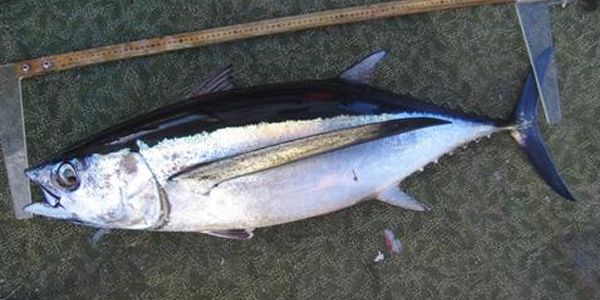
Where to buy and sell Albacore Longfin Tuna, lowest (cheapest) and highest price.
check offers buy sell Albacore Longfin TunaToday price for Albacore Longfin TunaAlbacore Longfin Tuna wholesale prices 2022
The Current commodity price of Albacore Longfin Tuna per kg, pound in the world in the global markets
albacore tuna
albacore tuna
albacore tuna
albacore tuna
What Is the Albacore Longfin Tuna Market and Why Does It Matter in Global Seafood Trade?
The Albacore Longfin Tuna market refers to the global trade, processing, pricing, and consumption ecosystem built around Thunnus alalunga, a highly migratory tuna prized for its pale flesh, firm texture, and strong position in both premium canned seafood and fresh fish channels. Unlike many food commodities, albacore supply is entirely shaped by wild catches, stock management, seasonality, ocean conditions, fleet behavior, and trade logistics. That combination makes the Albacore tuna market unusually sensitive to regulation, climate variability, quality grading, and shifts in consumer demand.
Albacore Longfin Tuna Market Overview
Why albacore stands apart in the tuna category
The Albacore Longfin Tuna market occupies a distinct position within the broader tuna industry because albacore is neither a mass-market commodity like skipjack nor a luxury species on the level of top-grade bluefin. It sits in an intermediate but strategically important segment. Processors value it for its light flesh, retailers value it for its premium shelf image, and consumers often associate it with a cleaner taste profile than darker tuna meats. In many mature seafood markets, albacore is the fish behind the idea of premium white tuna, especially in canned and jarred formats, while in coastal fresh markets it also appears as steaks, loins, and whole fish sold during short seasonal windows. This dual identity gives albacore a wider commercial reach than many analysts first assume. It can function as an industrial raw material, a branded gourmet ingredient, a foodservice protein, and a seasonal catch tied to local fishing communities.
That commercial flexibility also explains why the global albacore tuna market is watched by producers, importers, processors, traders, and price-monitoring portals. The same species can move through very different value chains. A portion of the catch is frozen quickly and directed toward canning, another part is sold fresh in domestic European markets, and another enters frozen international trade as industrial raw material or as table fish. The market therefore has several overlapping price references rather than one universal benchmark. Dockside or first-sale prices can behave very differently from cross-border import prices, and wholesale fresh fish values can diverge sharply from frozen industrial values. For anyone tracking commodities, this is a central point: albacore is not a uniform product but a multi-format market where form, origin, timing, and intended use can radically change price realization.
In strategic terms, the market matters because albacore combines three features that rarely appear together. First, it is a wild-caught resource, so output cannot be expanded simply by planting more acreage or building more ponds. Second, it is deeply international, with Pacific, Atlantic, Indian Ocean, Mediterranean, European, Asian, and American connections. Third, it is governed by strong sustainability and quota narratives, which increasingly affect buyer decisions, certification access, and brand positioning. This means the Albacore Longfin Tuna market outlook depends not only on demand growth but also on stock condition, regional management discipline, fleet economics, and the industry’s capacity to convert a variable biological resource into stable commercial supply. For SEO-oriented market analysis, that is exactly why albacore deserves its own discussion rather than being hidden inside general tuna commentary.
Where Is Albacore Longfin Tuna Produced and How Much Is Produced Worldwide?
Global production volumes and the importance of data timing
The best way to understand Albacore Longfin Tuna production is to separate official catch history from very recent fishery updates. The most widely cited consolidated market tables show that world albacore production reached roughly 206,000 tonnes in 2021, after a decade in which output trended lower overall despite a few rebounds. In that longer view, production moved down from around 259,000 tonnes in 2012, illustrating that the albacore industry has not been a simple volume-growth story. It has been a market increasingly shaped by tighter biological discipline, shifting fleet behavior, changing ocean conditions, and commercial reallocation rather than by relentless expansion. More recent RFMO-based overviews suggest that global retained catches in 2023 were close to 212,000 tonnes, which indicates some stabilization, but not the kind of surge that would transform the species into an abundant low-cost raw material. This is a crucial distinction for buyers: albacore supply is meaningful on a global scale, yet still limited enough for relatively small shifts in catch, effort, or demand to affect pricing.
Another defining feature of the market is that albacore is not a farmed fish. Unlike salmon, pangasius, shrimp, or seabass, there is no large-scale aquaculture system available to smooth supply. Every tonne comes from capture fisheries. That single fact helps explain much of the price behavior in the Albacore tuna market. Supply responds to migration, abundance, fishing opportunity, fuel cost, weather, stock rules, and the operational decisions of fleets. It also means production data often arrive with a delay. Official compilations must aggregate national reporting, reconcile gear and area information, and align with fishery bodies. As a result, analysts often work with a combination of historical official tables and newer regional assessment summaries. This does not weaken the market picture; it simply means the albacore trade is one of those sectors where the freshest directional view and the latest fully harmonized global table may not be published at the same time.
Leading producing countries and what their roles mean
Looking at the country structure, the largest Albacore Longfin Tuna producers in the 2021 global table were Taiwan with about 44,018 tonnes, China with roughly 38,635 tonnes, the EU-27 with around 31,712 tonnes, and Japan with approximately 29,593 tonnes. They were followed by Indonesia at about 8,897 tonnes and the United States at roughly 3,980 tonnes, while other producers together contributed close to 49,178 tonnes. This pattern tells an important story. The market is not dominated by one single nation or one single ocean. Instead, it is distributed across longline-heavy Asian fleets, seasonal European surface fisheries, Pacific island-linked supply chains, and Atlantic-based operations. Taiwan and China are especially important because they connect large-scale fishing capacity with export-oriented trade. The EU matters both as a catching region and as a processor-consumer bloc. Japan remains relevant not just as a producer but also as a market with demanding quality specifications. Indonesia contributes meaningfully in the Indian Ocean context, while the United States has a smaller share globally but remains commercially important in the premium shelf-stable and West Coast narrative.
Within the European albacore tuna market, production is strongly concentrated. EU catches in 2021 were about 31,700 tonnes, with roughly 86% coming from the Northeast Atlantic, around 8% from the Mediterranean, and the balance largely from the eastern Atlantic. Spain alone landed about 17,604 tonnes in the EU catch table, France around 8,698 tonnes, Ireland roughly 2,879 tonnes, and Italy close to 1,192 tonnes. This concentration is why Spanish and French landing patterns matter so much for fresh market tone, for canning raw material availability in Europe, and for the timing of seasonal price moves. It also helps explain why the market frequently feels tighter than global numbers alone might suggest. The catch exists in multiple basins, but regional fresh and processing chains can still become squeezed if one major producer has a weak season.
Production is global, but availability is seasonal and uneven
Even though albacore is caught around the world, the effective commercial supply curve is not smooth. Availability changes with migration, age structure, and gear mix. European fresh markets are heavily influenced by summer and early autumn landings, especially from the Bay of Biscay and nearby waters. Longline-based supply from Asian fleets follows a different rhythm and tends to feed frozen and export channels. South Pacific output matters greatly to processors serving canned white-tuna demand. Indian Ocean supply is relevant both in its own right and because it broadens the geographic spread of raw material. The practical consequence is that the global albacore production map is broad, but the timing, format, and commercial destination of production are highly uneven. Market participants who treat annual tonnage as if it were instantly fungible across all channels usually misread the product. In albacore, production volume matters, but where the fish is caught, when it is landed, and how it is processed matter almost as much as total output.
Regional Production Map: Pacific, Atlantic, Indian Ocean, and Mediterranean Dynamics
Pacific albacore: the core of the market
The Pacific basin remains the center of gravity for the Albacore Longfin Tuna market. In the North Pacific, recent scientific work continues to describe the stock as healthy, with spawning biomass estimated at about 3.44 times the precautionary limit and fishing pressure at roughly 44% of the level associated with maximum sustainable yield. That matters commercially because it reduces the risk of abrupt, crisis-style supply restrictions. The North Pacific is also unusual because fleet mix plays a major role in how the market feels. Troll fisheries capture many juveniles and can be highly sensitive to recruitment variability and shifting ocean conditions, while longline fleets target older fish and tend to feed different commercial channels. In the South Pacific, the stock is likewise considered not overfished and not subject to overfishing, and catch volume in the WCPFC convention area reached roughly 74,600 tonnes in 2024, valued at about USD 292 million. Longline fleets dominate there, and the region is extremely important for processors supplying premium canned albacore to North American and other international markets.
The Pacific story is not simply about healthy biomass; it is also about management modernization. In recent years, the region has moved further toward harvest-strategy thinking, and the adoption of a South Pacific albacore management procedure marked a significant step toward more predictable annual decision-making. For the market, predictability can be almost as valuable as abundance. Processors, buyers, and retailers prefer a system in which catch limits or effort controls respond to transparent rules rather than last-minute negotiation. That does not eliminate volatility, but it can reduce the fear premium embedded in procurement decisions. It also supports certification narratives and long-term contracts. As a result, Pacific albacore is not only the largest block of supply; it is also increasingly a testing ground for how modern fisheries governance can improve commercial planning.
Atlantic albacore: diversified, seasonal, and commercially visible
The Atlantic albacore market is more fragmented but commercially very visible, especially in Europe. In the North Atlantic, the stock is assessed as not overfished and not undergoing overfishing, and ICCAT’s management procedure has translated that status into a TAC of 47,251 tonnes for 2024-2026. Preliminary reported catch for 2023 was about 28,212 tonnes, well below the TAC. This is highly relevant for European fleets and processors because North Atlantic albacore shapes the identity of seasonal fresh sales and branded regional products. Surface fisheries in the Bay of Biscay and adjacent waters are especially important for Spain, France, Ireland, and Portugal, while longline activity adds another supply layer. North Atlantic albacore is not only a biomass story; it is also a cultural and retail story, tied to local auctions, premium labeling, and regional seafood traditions.
In the South Atlantic, the stock is also considered, on balance, not overfished and not undergoing overfishing, with ICCAT management based on a 28,000-tonne TAC for 2023-2026. Preliminary reported catch for 2023 was around 22,075 tonnes, so the region remained below the TAC. The South Atlantic matters because it contributes frozen export supply and adds diversification outside the more visible North Atlantic and Pacific narratives. It also illustrates a broader point about the global albacore industry: catch may come from multiple oceans, but commercial awareness often lags behind physical supply. Traders know this. Buyers who depend on one region alone are more exposed than those able to source across oceans and product forms.
Indian Ocean and Mediterranean: very different risk profiles
The Indian Ocean albacore market has grown in strategic importance because it broadens supply and gives longline-based operators another major basin. Recent scientific advice indicates the stock is not overfished and not subject to overfishing, with 2024 catch around 37,006 tonnes and an average of about 40,825 tonnes during 2020-2024. The fishery is dominated by longline gear, which accounts for roughly 82.5% of recent retained catch, while line fisheries contribute about 14.7%. The main fleets are led by Taiwan, which accounts for just over half of recent retained catch, followed by Indonesia and China. For the market, this means Indian Ocean albacore is central to frozen trade, industrial supply planning, and risk diversification. It is also a region where climate signals, spatial shifts, and the quality of effort and size data remain important analytical themes.
The Mediterranean albacore market is much smaller, but it deserves separate attention because its risk profile is different. Recent assessment work has shown significant uncertainty. Under one scenario the stock appears overfished and subject to overfishing; under another it does not. Because of that uncertainty, ICCAT has maintained a rebuilding framework and set a 2,500-tonne TAC for 2025 and 2026. Commercially, the Mediterranean is not the volume engine of the world albacore market, but it is important as a reminder that not all albacore stocks are equally straightforward. A global bullish narrative that ignores Mediterranean uncertainty is incomplete. The better conclusion is that the species as a whole looks relatively resilient in major basins, yet regional management quality and data robustness still matter enormously.
Albacore Longfin Tuna Price Trends in Recent Years
Why there is no single albacore price
Anyone tracking Albacore Longfin Tuna prices quickly discovers that there is no universal market quote. Price formation depends on product form, grade, size, location, timing, and destination. Fresh and chilled albacore behaves like a premium seasonal fish product. Frozen albacore behaves more like industrial raw material or standardized international trade. First-sale prices at ports can be highly seasonal and influenced by local supply surges, while import prices reflect freight, currency, customs classification, and the degree of processing. This is why one part of the market can feel depressed while another remains firm. During strong landing months, auction prices may weaken even if retail or import values later recover. Conversely, a shortage of whole fish at first sale may not immediately show up in shelf prices if processors still hold inventory. In short, price analysis in the albacore market always requires product segmentation.
Recent international ranges confirm that price volatility has been meaningful. For fresh albacore tuna, global export and import prices in 2023 ranged broadly from about USD 4.25/kg to USD 35/kg, and in 2024 the range remained wide at about USD 3.28/kg to USD 35.61/kg. That spread tells us two things. First, fresh albacore is not one homogeneous product; quality, presentation, destination, and timing create sharp differentials. Second, premium fresh markets can still deliver very high prices even when lower-end quotes soften. On the frozen side, 2023 prices roughly ranged from USD 1.83/kg to USD 10.75/kg, moving upward in 2024 to about USD 2.79/kg to USD 13/kg. These lower average levels reflect the industrial character of much frozen trade, but the upward shift also signals tighter raw material economics in parts of the supply chain.
European first-sale trends: seasonality and value compression
The European albacore tuna market offers a good case study because it combines fresh seasonal landings with industrial processing demand. Reported first sales in EU countries reached about 25,442 tonnes in 2023, worth roughly EUR 79 million. That represented a decline of about 10% in volume and 26% in value versus 2022, with France showing especially sharp weakness. This is a strong reminder that a market can lose value faster than it loses tonnage when price pressure intensifies. Over 2021-2023, monthly first-sale prices in Spain fluctuated between roughly EUR 2.83/kg and EUR 11.66/kg, in France between EUR 2.05/kg and EUR 6.37/kg, and in Italy between EUR 2.00/kg and EUR 18.50/kg. The ranges are wide because volumes are seasonal and product presentation differs, but they also show how dramatic the spread can be between ordinary supply periods and higher-value windows.
Seasonality is particularly visible in Europe. First-sale volumes tend to rise strongly in summer, while winter activity can be minimal. In France, higher summer supply has often coincided with weaker prices, whereas winter scarcity supports firmer values. Spain shows the same general seasonality, though the price pattern can be less mechanically linked to volume because domestic demand, quality perception, and outlet mix play a larger role. More recent EUMOFA updates indicate that 2024 was not simply a one-way downward story: some months showed rebounds in first sales, and 2025 summaries suggest that albacore continued to be an important value contributor in Spain even when total volume was softer. This suggests that the market has not collapsed; rather, it has become more selective, rewarding timing, origin, and product placement.
What the recent price history really means
The practical reading of recent albacore tuna price trends is that the market has become structurally more differentiated. Lower-value industrial segments still respond to raw material abundance, freight cost, and canning economics. Premium fresh and branded segments remain capable of generating strong returns, but only when quality and season align. Buyers are increasingly careful, and processors are more disciplined about what price levels can be passed through to retailers. At the same time, supply cannot expand quickly because albacore is wild-caught. That means price softness caused by temporary oversupply can reverse faster than in farmed seafood markets. For commodity watchers, the key lesson is that the Albacore Longfin Tuna market behaves like a hybrid of a fishery product, a branded grocery input, and a seasonal premium protein. Its recent price history reflects all three identities at once.
Export, Import, and Global Trade Flows in the Albacore Longfin Tuna Market
Frozen trade is the larger engine
In cross-border trade, frozen albacore is the dominant format. Global trade in frozen albacore or longfin tuna reached about USD 369 million in 2024, slightly above the previous year. The leading frozen exporters include Chinese Taipei, China, and Fiji, with other relevant suppliers such as Japan and Mauritius also appearing in trade statistics. In named reporter tables, China exported roughly USD 62.7 million worth of frozen albacore in 2024, Fiji about USD 29.3 million, Japan roughly USD 17.1 million, and Mauritius around USD 16.5 million. On the import side, Thailand imported close to USD 97.0 million, Japan about USD 45.4 million, and Spain roughly USD 23.3 million, while the broader European Union and Mauritius were also important. This pattern fits the structure of the industry. Frozen material travels efficiently over long distances, supports industrial planning, and can be directed to canning, secondary processing, or redistribution hubs. It is the format that best connects harvesting regions with processing centers.
The frozen trade also reveals how value chains specialize. Some countries are strong catching nations but modest end-consumer markets. Others are processing hubs that import for re-export or domestic packing. Thailand is significant because of its large tuna-processing base, even though skipjack and yellowfin remain bigger species there overall. Spain matters because it is both a catching country and a processor-consumer market with deep tuna expertise. China’s role is significant not just because of catching power but also because it participates in export flows and can serve industrial demand. Fiji and other Pacific-linked exporters matter because South Pacific albacore is especially relevant for premium canned white-tuna supply chains. In other words, the global frozen albacore market is shaped less by proximity and more by the logic of industrial conversion, trade specialization, and contracted procurement.
Fresh and chilled trade is smaller but more value-dense
The fresh and chilled albacore tuna trade is much smaller in total value than frozen trade, but it is commercially meaningful because it serves higher-value channels. In 2024, global trade in fresh or chilled albacore reached around USD 57.3 million, a very strong increase from 2023. Trade data show that European exporters dominate this segment, with countries such as France, Ireland, Spain, and Italy appearing prominently, alongside Ecuador in some tables. On the import side, Spain imported around USD 15.2 million of fresh or chilled albacore in 2024, Italy roughly USD 12.3 million, and France about USD 8.5 million, with Portugal and the United States also ranking among the main buyers. This is a classic regional fresh-fish pattern: product moves quickly, distances are shorter on average, and trade is often linked to neighboring consumer markets or specialized wholesale centers rather than broad global redistribution.
Fresh and chilled trade is also where the premium identity of albacore becomes more visible. A well-timed seasonal fishery in Europe can feed domestic and neighboring markets with relatively high-value product, while processors and wholesalers can differentiate by freshness, size, handling, and regional brand story. Because the volumes are smaller, changes in availability can alter prices quickly. This channel is less about huge tonnage and more about margin, reputation, and timing. That is why exporters and importers operating in fresh albacore tend to focus intensely on logistics, temperature control, auction access, and market windows.
The EU is both a market and a trading system
No analysis of the Albacore Longfin Tuna import-export market is complete without the European Union. In 2023, the EU imported about 6,627 tonnes of albacore from third countries, worth roughly EUR 22 million. Most of that value came from frozen products, especially those destined for canning. South Africa and China were the most important external suppliers by value, while Spain overwhelmingly dominated EU extra-EU import demand. At the same time, intra-EU trade reached roughly 7,838 tonnes and about EUR 28 million, with fresh products accounting for the majority of intra-EU export value. France and Spain were leading intra-EU exporters, and Spain was the main destination inside the bloc. This matters because the EU is not merely an end market. It is a multi-layer trading platform where domestic catches, extra-EU imports, intra-EU redistribution, fresh seasonal auctions, and processing demand all interact.
There is one additional complication analysts should remember: canned albacore is harder to measure directly in customs data because it is often grouped with canned tuna from other species. That means trade in raw and semi-processed forms is easier to quantify than final shelf-ready albacore products. For market intelligence, this creates a blind spot. It also means that the real commercial footprint of albacore in branded consumer goods is larger than some customs tables suggest. When evaluating the market, traders therefore look not only at species-specific raw material codes but also at processor behavior, pack format trends, retailer assortment, and white-tuna demand in consumer markets.
How Albacore Longfin Tuna Is Used in Industry and Consumer Markets
Canning remains the backbone of industrial demand
The canning industry is still the main industrial outlet for albacore. In Europe, official market studies note that most landings are used as raw material for canning, while in the United States canned albacore has a special commercial identity because it is the only tuna that can be labeled “white meat”. This labeling distinction matters. It supports a premium over standard canned tuna products, influences consumer perception, and helps processors defend shelf space in a competitive grocery environment. Albacore works well in cans, jars, pouches, and other shelf-stable formats because its flesh structure and pale color create a recognizable difference from darker tuna species. For brands, that difference can be turned into a story about quality, texture, and meal versatility. For buyers, it often justifies higher retail price points.
At the same time, the canned albacore business is not monolithic. There is a basic industrial layer centered on frozen raw material conversion, and there is a premium layer built around provenance, pole-and-line or troll narratives, olive-oil packs, glass jars, or regional identities. Spain’s bonito del Norte segment is a good example of how albacore can sit inside a more artisanal or premium value proposition. In North America, shelf-stable white tuna occupies its own quality niche. In both cases, the product is more than protein. It is a category with branding power. This helps explain why albacore remains commercially attractive even when total tonnage is smaller than that of skipjack or yellowfin.
Fresh, frozen, foodservice, and higher-end retail channels
Beyond canning, fresh and frozen table-fish channels give albacore additional value. Whole fish, loins, steaks, and portions are sold in seasonal fresh markets, high-end fishmongers, supermarkets with strong seafood counters, and foodservice channels. Albacore is not as dominant in sushi and sashimi as bluefin or bigeye, yet it still has a place in that ecosystem, particularly where a lighter-colored, milder, less fatty tuna option is desired. In Europe, some fresh landings are consumed directly, and smaller but meaningful volumes also circulate as defrosted retail fish. This supports price layering across the species. A fish that is too small, too late, or too poorly timed for one channel may still have value in another.
Foodservice demand can matter more than it appears. Restaurants, delis, sandwich chains, and prepared-meal operators do not always advertise species in a way that is easy to measure statistically, but they influence demand for portions, loins, and premium shelf-stable formats. Consumer trends toward high-protein eating, convenient seafood, and better-for-you pantry products have also helped albacore maintain relevance. The species benefits from being versatile. It can sit in a gourmet retail jar, a mid-market pouch, a fresh grilled fish program, or a seafood salad line. That versatility is one of the reasons the Albacore Longfin Tuna market is more resilient than a narrow niche fish market would be.
By-products, secondary processing, and value recovery
Like other commercially important fish species, albacore also feeds secondary processing and by-product recovery. Trim and lower-value fractions can enter pet food, fish meal, oils, or ingredient channels, while better cuts go to table use. Modern processors try to maximize yield from each fish because raw material is costly and supply is constrained. This focus on yield matters in price formation. When energy, labor, and packaging costs rise, processors become even more sensitive to recovery rates, fillet performance, and pack efficiency. In a market where the fish cannot simply be farmed in higher volume, processing efficiency becomes a supply tool. The industry’s profitability therefore depends not only on catching fish but on extracting the highest possible value from every kilo landed or imported.
What Drives Albacore Longfin Tuna Prices?
Supply-side drivers: biology, weather, and management
The most important Albacore Longfin Tuna price drivers start on the supply side. Because albacore is wild-caught, the market reacts to stock condition, migration patterns, recruitment strength, fishing season length, weather, and management rules. A healthy stock does not automatically mean abundant supply at the right time and place. Fish can shift geographically, fleets can struggle with cost, and regulatory effort controls can limit expansion even when biomass looks solid. The market is therefore highly sensitive to the gap between theoretical biological availability and commercially accessible supply. This is especially visible in troll and surface fisheries, which can be strongly affected by the availability of juveniles and the location of schools. If fish move farther offshore or timing changes, the local market can tighten quickly.
Management is another major driver. TACs, rebuilding plans, effort caps, vessel limits, seasonal closures, and harvest strategies all shape the supply curve. In the North Atlantic and South Atlantic, TAC decisions under ICCAT influence the production environment. In the Mediterranean, rebuilding rules create a clear cap on expansion. In the Pacific, management procedures are designed to keep fishing pressure within agreed biological bounds. This does not just affect long-term sustainability; it affects price expectations. When markets believe management is credible and predictable, buyers are more willing to plan forward. When scientific uncertainty is high, as in the Mediterranean, or when effort and catch-rate debates intensify, risk premiums can rise.
Cost-side and trade-side drivers: fuel, labor, freight, currency
Even when fish are available, operating economics matter. Fuel is a classic driver in tuna fisheries because vessels travel long distances and ocean-going operations are energy intensive. Labor availability, wage pressure, observer requirements, insurance, financing cost, maintenance, and port fees all influence fleet behavior. On the processing side, freezing, thawing, canning, pouching, labor, packaging metal, glass, and cartons add another cost layer. Then international trade introduces freight rates, cold-chain cost, customs procedures, and currency risk. A processor importing frozen albacore may be exposed not only to fish prices but to container availability, exchange-rate movements, and the cost of credit. That is why the Albacore tuna market can remain firm even when landings improve: the delivered cost structure may still be rising.
Currency movements deserve special attention. Tuna is traded across regions with different monetary exposures, and a stronger or weaker euro, dollar, yen, or local currency can change competitiveness. European importers of frozen raw material, Asian exporters, and U.S. buyers of packaged product do not experience the same cost base. Trade concentration adds to the effect. If a few major suppliers dominate frozen export supply, any disruption in those origins can ripple into import markets. In a commodity-monitoring environment, exchange-rate context is therefore not optional; it is part of price interpretation.
Demand-side drivers: consumer preference, substitution, and branding
Demand also shapes albacore market prices, but in a more layered way than simple tonnage data suggest. Shelf-stable white tuna demand in North America can support procurement even if other tuna segments soften. Regional premium brands in southern Europe can defend price through origin and tradition. Fresh market demand can spike during seasonal promotions or weaken if foodservice sentiment deteriorates. Albacore is also influenced by substitution. When prices for skipjack, yellowfin, or other proteins shift, some buyers adjust formulas, promotions, or menu plans. However, substitution is incomplete because albacore carries a different eating and branding profile. Consumers looking specifically for white tuna are not making a purely interchangeable choice.
Finally, sustainability, certification, traceability, and health perception increasingly affect prices. Buyers serving premium retail channels may pay more for certified supply, better documentation, or reputational security. Conversely, concerns about mercury, bycatch, or stock uncertainty can reduce buyer enthusiasm or trigger stricter specifications. The result is a market where price is formed not only by supply and demand, but by confidence in the product story. In modern seafood trade, that confidence has become a monetizable asset.
Commercial Types, Grades, and “Varieties” in the Albacore Market
Albacore does not have cultivars, but it does have commercial “varieties”
When people ask about Albacore Longfin Tuna varieties, they usually do not mean biological varieties in the agricultural sense. Albacore is one species, Thunnus alalunga, and the market differentiates it commercially rather than botanically. Those commercial differences are real and economically important. Buyers separate product by ocean origin, stock area, gear type, size, fat level, handling quality, and end use. A fish caught in a seasonal European surface fishery and sold fresh is not valued the same way as longline-caught frozen industrial raw material bound for canning. Both are albacore, yet the commercial identity can feel like two different products. Understanding these “varieties” is essential for SEO-quality market content because it explains why albacore prices can look contradictory across sources.
Main market segments inside the species
The most important commercial segments in the albacore market include fresh whole fish, chilled loins, frozen whole fish, frozen industrial raw material for canning, retail-ready portions, and shelf-stable final products such as canned or pouched albacore. Size also matters. Smaller fish may fit industrial or lower-price uses, while larger or better-presented fish can earn more in fresh markets. Handling quality changes everything. Fish bled, chilled, and moved efficiently can access premium channels, while fish of more ordinary industrial quality move into canning streams. Origin labels add another layer. In Spain, bonito del Norte is a powerful market term. In the United States, white tuna is the key commercial identity. These are not separate species, but they are separate value propositions.
- Fresh or chilled albacore: usually higher-value, more seasonal, more logistics-sensitive.
- Frozen albacore for industrial processing: central to canning and international raw material trade.
- Frozen albacore for table use: more standardized, often sold as whole fish, loins, or steaks.
- Premium branded albacore: emphasizes origin, certification, artisanal packing, or regional heritage.
- Foodservice and portioned product: built around convenience, consistency, and menu utility.
Gear and origin can influence value perception
Although not every market pays a formal premium by gear, how albacore is caught can influence buyer perception. Troll, pole-and-line, hook-and-line, longline, pelagic trawl, and other methods are all relevant in different regions. Some premium programs favor specific gears because of quality, sustainability image, or bycatch profile. Origin has similar power. South Pacific albacore may be closely tied to premium canned supply chains. Bay of Biscay albacore carries strong regional recognition in Europe. Atlantic and Indian Ocean supply may fit different processing strategies and trade routes. These distinctions matter because they create micro-markets within the broader species. Anyone writing about albacore as if it were a single undifferentiated commodity misses one of the market’s core characteristics.
There is also an analytical benefit to thinking in commercial varieties. It clarifies why some statistics are strong for fresh trade while frozen trade seems flat, or why first-sale prices can rise even when import values soften. The answer is often not confusion in the data, but segmentation in the market. The Albacore Longfin Tuna market is best understood as a structured family of related products rather than one monolithic product stream.
Technologies Used Across the Albacore Longfin Tuna Supply Chain
Fishing technologies and fleet practices
The technology profile of the albacore market starts at sea. Different regions use different gears, including troll lines, pole-and-line, hook-and-line, pelagic trawls, and longlines. The choice of gear affects not only catch efficiency but also fish size, handling, bycatch profile, and product destination. Longline fleets dominate several ocean basins and are particularly important in the South Pacific and Indian Ocean. Surface and line fisheries remain highly relevant in the European seasonal fishery. Over time, older live-bait rod systems have in many places given way to more productive methods, illustrating the constant tension between tradition, efficiency, and market demand. Modern vessels also rely heavily on navigation systems, sonar interpretation, oceanographic data, weather routing, refrigeration systems, and onboard freezing capacity. The result is a far more data-rich and technologically capable fishery than the romantic image of tuna fishing might suggest.
Monitoring technology is just as important as catching technology. Vessel monitoring systems, electronic logbooks, onboard observers, electronic monitoring, digital catch documentation, and transshipment controls are increasingly integral to the global albacore supply chain. These tools affect market access because major buyers want proof of legality, traceability, and responsible harvest. For fleets, that means compliance is no longer just a regulatory cost; it is often a prerequisite for selling into premium channels. As sustainability scrutiny rises, the commercial value of strong monitoring systems increases as well.
Scientific and management technologies
One of the least visible but most important parts of the modern Albacore Longfin Tuna market is the technology used to assess and manage the stock. Regional bodies now rely on increasingly sophisticated stock-assessment models, standardized CPUE series, age-structured approaches, management strategy evaluation, and harvest-control rules. In practical terms, this means the market is being shaped by better science than in earlier decades. North Pacific and South Pacific management have moved deeper into harvest-strategy logic. ICCAT’s management procedure for North Atlantic albacore is another example of science being turned into operational decision rules. Indian Ocean work continues to refine Stock Synthesis and fishery indicators. This is highly relevant for price outlooks because better management technology can improve predictability, reduce collapse risk, and give buyers more confidence in forward planning.
There is still uncertainty, of course. Climate variability, data gaps, selectivity assumptions, and changing fishing behavior ensure that assessment work remains complex. But the direction is clear: albacore is part of a digitally monitored, scientifically managed seafood economy. Over time, that can help reduce the kind of unmanaged volatility that destroys value in fisheries. It will not erase seasonal swings or biological shocks, yet it can support more stable long-term commercial development.
Processing, cold chain, and product technology
Once albacore is landed, a different set of technologies becomes decisive. Rapid icing, superchilling, blast freezing, vacuum packing, portion control, grading, metal detection, species verification, and digital traceability systems are now standard components of competitive processing. High-value fresh channels depend on impeccable time-temperature handling. Frozen industrial trade depends on preserving raw material yield and avoiding quality loss over long shipping routes. Shelf-stable formats depend on precise cooking, packing, and sealing performance. In a resource-constrained fishery, even small yield improvements matter. Better freezing and thawing protocols, lower drip loss, and more efficient trimming can materially change processor margins.
Data technology is now part of the commercial toolkit as well. Importers and processors increasingly use digital sourcing platforms, price intelligence tools, inventory analytics, and demand forecasting systems to manage purchasing risk. The future of the albacore market will not be shaped only by boats and quotas, but by which firms best connect biology, logistics, compliance, and market intelligence into one operating model.
Opportunities in the Global Albacore Longfin Tuna Market
Healthy major stocks support a constructive market narrative
One of the biggest opportunities in the Albacore Longfin Tuna market is that several of the major stocks currently sit within a relatively constructive sustainability narrative. The North Pacific and South Pacific stocks are assessed as healthy, the North Atlantic remains in a strong position under its management procedure, and the Indian Ocean is also considered not overfished and not subject to overfishing. That does not mean risk has vanished, but it does mean albacore is not being discussed primarily as a crisis species in most major basins. For the commercial sector, that is valuable. It allows brands, retailers, and processors to invest in product development, longer-term sourcing, and premium communication without carrying the same reputational burden faced by more troubled fisheries.
The broader tuna sustainability conversation has also improved. Industry sustainability reporting in 2026 emphasized that almost all global commercial tuna catch now comes from stocks not experiencing overfishing, and the overwhelming majority comes from stocks at healthy abundance levels. Albacore benefits from that wider context. Even if a retailer is not communicating stock-by-stock biology to shoppers, the overall category narrative influences purchasing confidence, private-label strategy, and category expansion. In practical terms, a stronger sustainability backdrop can support better market access, greater retailer commitment, and willingness to pay for certified or well-documented supply.
Certification, branding, and premiumization
Another clear opportunity lies in certification and premium branding. South Pacific albacore fisheries have long had an MSC-certified presence, and Indian Ocean longline albacore certification has broadened the menu of certified supply available to global buyers. Certification does not guarantee high prices on its own, but it expands eligibility for premium retail programs, foodservice procurement, and responsible sourcing frameworks. In markets where consumers and institutional buyers increasingly ask for proof of sustainability, certification can function as both a market-access tool and a price-support tool.
Premiumization offers even more room for growth. Albacore is well positioned for upscale canned seafood, clean-label pouches, regional origin stories, olive-oil premium packs, and high-protein convenience formats. The species already has a strong sensory and branding platform. It can therefore benefit from the same premium shelf-stable trend that has lifted other fish products in specialty retail. For processors, the opportunity is not necessarily to sell vastly more tonnes, but to generate more value per tonne. That is especially attractive in a fishery where total supply is constrained and operational costs are high.
Supply chain diversification and market development
There is also room for improvement in sourcing strategy and geographic diversification. Buyers that can balance Pacific, Atlantic, and Indian Ocean exposure are generally better positioned to manage risk. Markets beyond the traditional centers could grow too, particularly where consumers are trading up from generic canned tuna to more premium species-specific options. Foodservice innovation, direct-to-consumer seafood, and value-added frozen portions create additional routes to expand demand without needing explosive catch growth. For coastal fishing regions, seasonal fresh albacore also remains a tourism and local-brand opportunity. The common thread is that the market’s future upside may come more from better monetization than from pure volume expansion.
Main Risks and Threats Facing the Albacore Longfin Tuna Market
Climate variability and recruitment uncertainty
The biggest long-term threat to the Albacore Longfin Tuna market outlook is not a single quota cut but the interaction of climate change with fish distribution, productivity, and fleet economics. Scientific bodies have repeatedly noted that environmental variability can alter fishing grounds, recruitment patterns, and effective availability. This matters especially in fisheries that depend on juvenile fish or on seasonal nearshore accessibility. A stock may remain officially healthy while still becoming harder or more expensive to catch in commercially important areas. That distinction is crucial. Markets often confuse biological abundance with easy supply, but they are not the same thing. If warming, currents, prey shifts, or habitat changes move fish away from traditional fleets, procurement cost can rise even without an overfishing problem.
Recruitment variability is another threat, particularly in systems where catch patterns rely on year-class strength. Market participants may see these effects first in changing size profiles, patchy seasonal landings, or unusual geographic concentration. Over time, that can reshape which fleets remain competitive and which product formats dominate. It can also make price forecasting harder. For a commodity-style market analysis, this is one of the most important structural risks: albacore is governed by marine biology, not by planted acreage.
Regulatory tightening, regional uncertainty, and data gaps
Regulation is necessary for sustainability, but it can also create commercial stress. The Mediterranean albacore stock remains the clearest example of uncertainty, with assessment scenarios pointing in different directions and a rebuilding framework still in place. That is not a global volume shock, but it shows how fragile market confidence can become when data and stock status are contested. More broadly, any region with weak data coverage, shifting fleet effort, or unresolved allocation debates can create risk for traders and processors who depend on it. Market access rules, labor standards, traceability requirements, and stricter buyer specifications can also raise compliance costs.
Another threat is that official data arrive with lags and are sometimes difficult to reconcile across customs codes, regional bodies, and product forms. This is especially true for final consumer products such as canned tuna, where albacore may be mixed statistically with other species. For businesses, incomplete visibility can lead to poor inventory decisions, procurement mistiming, or false confidence about market balance. In modern seafood, information risk is real risk.
Cost inflation, trade disruption, and reputational pressure
The albacore market is also exposed to classic business threats: high fuel, labor inflation, packaging cost, freight disruption, exchange-rate swings, and trade friction. A container-rate spike or a currency move can alter import economics almost overnight. Concentration of supply adds another vulnerability. If a small number of origins dominate a product form, disruption in one area can quickly move prices elsewhere. Retailers and brands face their own reputational pressure. They must answer questions about traceability, sustainability, mercury, and processing integrity. If trust weakens, even a healthy fishery can suffer commercially.
Finally, there is the competitive threat from inside the tuna category and from other proteins. If consumers become more price sensitive, some may shift toward cheaper canned tuna species or entirely different proteins. Albacore’s premium position is an advantage, but it can become a weakness during periods of consumer downtrading. The market therefore needs to protect both affordability and differentiation. Losing either one would weaken its long-term commercial position.
Global Market Outlook and Future Prospects for Albacore Longfin Tuna
Expect value growth to outpace volume growth
The most realistic Albacore Longfin Tuna forecast is not one of explosive volume expansion. Because the species is wild-caught and management systems are becoming more precautionary and rules-based, total production is likely to remain constrained within biological and regulatory limits. That means future growth is more likely to come from value creation than from raw tonnage. Premium canned products, certified supply, stronger origin branding, improved processing yield, and better product segmentation should all matter more than simple catch expansion. This is actually a constructive market feature. Industries built on scarcity with credible sustainability are often able to support firmer prices than industries built on uncontrolled volume growth.
Recent data support this interpretation. Global frozen and fresh trade values have both remained meaningful, premium price ranges are still wide, and key major stocks remain broadly healthy. Europe continues to matter as both market and processor, the Pacific remains the strategic supply core, and the Indian Ocean adds diversification. The market therefore has a solid foundation. What it lacks is not demand potential, but rather unlimited biologically accessible supply. For investors, traders, and strategic buyers, this implies a future in which procurement discipline and channel mix matter more and more.
What may define the next phase of the market
Several forces are likely to shape the next chapter of the global albacore tuna market. One is the spread of management procedures and more predictable harvest rules. Another is the deepening role of certification and traceability in buyer selection. A third is the continued premiumization of shelf-stable seafood, where albacore has a natural advantage due to its white-meat identity. Digital market intelligence will also become more important. Companies that can read first-sale shifts, trade patterns, inventory turns, and regional pricing quickly will outperform slower rivals. In a variable fishery, information speed can create margin.
At the same time, climate-related uncertainty will remain the market’s main strategic challenge. The next phase is unlikely to be a calm, linear trend upward. It is more likely to be a pattern of firm underlying value support interrupted by regional volatility, weather-related supply noise, and occasional regulatory recalibration. Buyers and sellers that accept this reality and build flexibility into contracts, sourcing, and product mix will be best placed to win.
Bottom line for market watchers
Overall, the Albacore Longfin Tuna market enters the next few years with more strengths than weaknesses. It has healthy core stocks in major basins, recognizable premium consumer identities, strong industrial uses, and growing support from traceability and certification systems. But it also has clear structural constraints: it is wild-caught, seasonal, internationally regulated, and vulnerable to shifting ocean conditions. That combination points to a market with solid long-term value prospects, moderate volume ceilings, and ongoing price volatility. For commodity analysts, the key message is simple. Albacore is not a cheap generic fish. It is a managed global protein market where biology, logistics, branding, and regulation meet. That is exactly why it deserves close, ongoing monitoring.
Download our new
Husfarm App
Stay up to date with the current prieces of agricultural products all over the world.


Do you want to sell agricultural products?
Are you an Agricultural processor looking for high-quality products to buy?
Post an ad for FREE!