

Key dates
- 7–16 June 1924Steiner’s agricultural course takes place at Koberwitz, now Kobierzyce.120
- 1939Balfour and Debenham begin the Haughley undertaking.7
- 1940Northbourne’s Look to the Land and Howard’s An Agricultural Testament are published.36
- 1946The Soil Association is established; Balfour’s The Living Soil had appeared in 1943.7821
- 5 November 1972The Versailles meeting establishes IFOAM.11
- 1978The long-term DOK comparison begins at Therwil.12
Koberwitz in 1924: one starting point
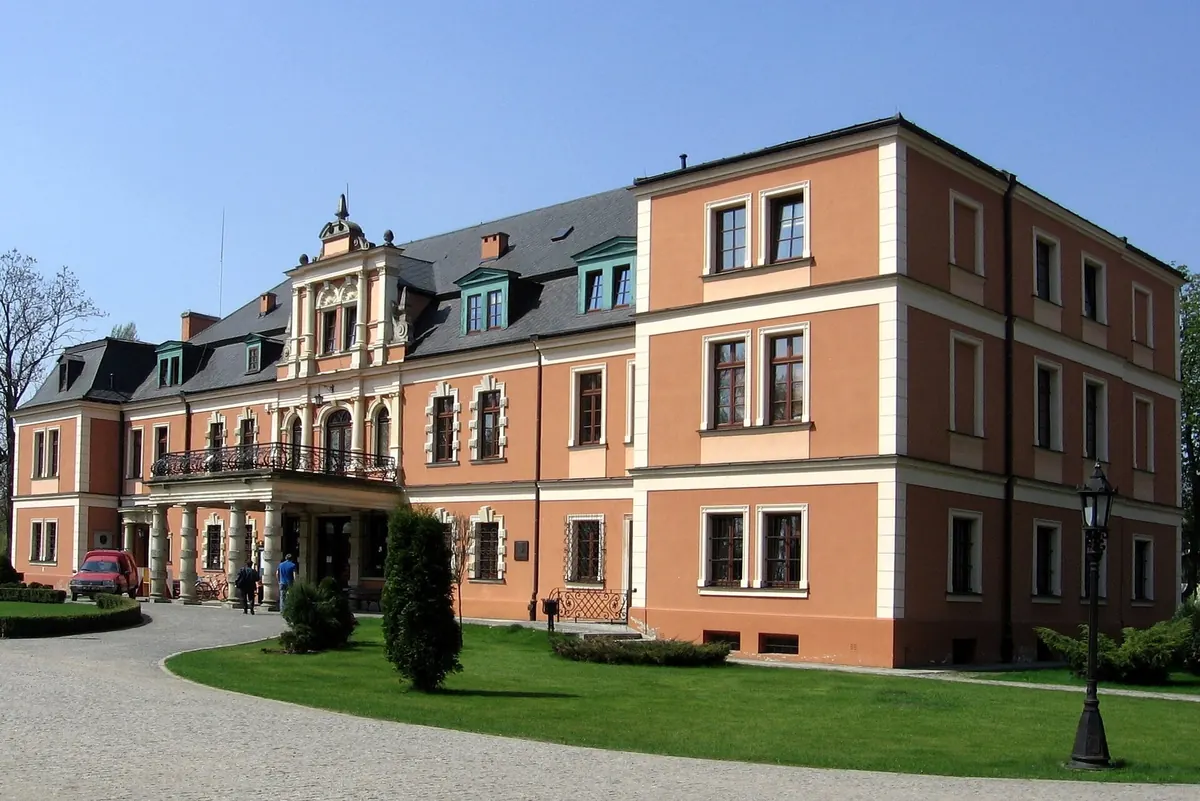
Between 7 and 16 June 1924, Rudolf Steiner delivered eight agricultural lectures at the Koberwitz estate, now Kobierzyce near Wrocław in Poland. The locality was then part of Germany. The course emerged from anthroposophy, a particular spiritual worldview, and became a reference point for biodynamic agriculture. It did not invent composting, crop rotation or concern for soil fertility. Its historical importance lay in organising a community that treated the farm as an interconnected entity and began a programme of practical investigation.
Research into the surviving registration list identified 111 participants, including people whose occupations were outside farming. An experimental circle distributed the lectures, while farm visits, correspondence and publications carried the ideas further. Ehrenfried Pfeiffer’s 1938 book helped introduce biodynamics to a wider readership. This is a history of intellectual exchange as well as agricultural practice. Recognising Steiner’s influence does not establish the scientific validity of his claims about cosmic forces: those claims must be distinguished from measurable effects of manure management or cropping sequences.1220
The name organic farming enters print
Walter James, Lord Northbourne, published Look to the Land in 1940 and introduced the expression organic farming into this debate. Organic referred to a farm conceived as an organism whose components depend on one another. It did not simply mean applying a fertiliser containing carbon. Northbourne connected soil fertility, livestock, crops and rural social organisation, contrasting this ideal with a farm dependent on purchased inputs.
The book followed exchanges among British proponents of biodynamics, including the 1939 Betteshanger meeting to which Northbourne invited Pfeiffer. Courses, demonstration farms and translated publications gave this network ways to discuss its experience. The importance of 1940 is therefore terminological and organisational, rather than a sudden invention of every practice later associated with organic agriculture. A manifesto could provide a shared point of reference without eliminating disagreement.3219
Albert Howard and the history behind Indore
Albert Howard’s An Agricultural Testament also appeared in 1940. Howard had spent many years working in agricultural research centres in India. He developed an approach to fertility centred on rebuilding humus and returning plant and animal residues to the land. Composting associated with Indore belonged to a wider organisation of farming, rather than being a separate invention capable of replacing every other task. Materials, labour and the links between livestock and crops mattered.
This history also involves the colonial setting of research and collaborators including Gabrielle Howard and Yeshwant D. Wad. Historian Gregory Barton challenged the simple story that Howard merely recorded the timeless wisdom of Indian peasants. Comparing earlier and later writings reveals changes in Howard’s treatment of fertilisers and crop protection. This does not erase local farmers’ knowledge. It shows why a later foundation story can obscure both their actual work and the contributions of experiments, institutions and scientific disputes.456
Haughley and the farm as a place of comparison
In 1939, Eve Balfour and Alice Debenham began the Haughley undertaking in Suffolk. Sections of the farm were managed according to different principles to investigate connections among soil, plants and animals. Balfour’s The Living Soil, published in 1943, brought these questions to a wider audience. The dates refer to different events: 1939 marks the start of the undertaking, whereas 1943 marks the book. The project directed attention towards farming systems and longer periods of observation, extending beyond the immediate effect of an isolated treatment.
Balfour helped build the circle from which the Soil Association emerged in 1946. Its early purpose included education and research, and it published the journal Mother Earth. A working farm and a publishing network could reach both agricultural practitioners and urban food consumers. Haughley was a consequential episode in this institutional history, but it cannot be treated as a universal test of all subsequent organic systems. Comparing outcomes requires attention to experimental design, soil conditions, crop choice and the definition of production.781321
From national networks to an international federation
Across the Atlantic, J.I. Rodale developed experiments alongside a publishing enterprise. He and Anna Rodale bought a Pennsylvania farm in 1940, and in 1947 he established the Soil and Health Foundation, later renamed Rodale Institute. Magazines, demonstrations and personal contacts created an audience for ideas previously circulated through smaller networks. This was more than the straightforward transfer of a European programme. Local farms, readers and organisers shaped priorities, while the publications made soil management part of a conversation extending beyond the agricultural profession.
On 5 November 1972, a meeting in Versailles created the International Federation of Organic Agriculture Movements, IFOAM. Its founding organisations came from France, Britain, Sweden, the United States and South Africa. Roland Chevriot of Nature et Progrès promoted cooperation across borders and the exchange of experimental information. The federation was not a single global certification authority. It provided a forum in which representatives of distinct traditions could seek recognition, develop cooperation and maintain contact with researchers.91011
Standards turn an idea into a market category
Expanding trade raised a practical question: how could a buyer know what a producer’s claim actually meant? The Soil Association developed standards from 1967 and launched its certification business in 1973. Rules, inspection and records connected a promise about production with a process that could be checked. Certification differed from a discussion society or an open-ended research project. It required boundaries for a category, conditions for participation and responsibility for the name attached to a product.
In the United States, the USDA’s 1980 report treated organic farming as a subject for systematic investigation of practices, motivations and research needs. The National Organic Program final rule, published in December 2000, established national production and handling standards. This history also explains why organic cannot simply be read as the absence of every crop-protection substance or every synthetic material. A regulated system depends on specified requirements and permitted or prohibited inputs. The historical rule illustrates institutional development; it is not a substitute for checking the law applicable to a producer today.81516
Long-term trials and the questions they can answer
The DOK trial began in 1978 at Therwil in Switzerland, comparing biodynamic, bioorganic and conventional systems. It investigated combinations of practices through a planned crop sequence and replicated treatments. Measurements covered harvests, nutrients, soil carbon and biological processes. Continuity allowed changes to be followed that a single growing season could not reveal. The word organic alone was insufficient to describe an experimental treatment: fertilisation, crop protection and the previous management of the field also mattered. The design made differences among systems explicit instead of treating them as one undifferentiated alternative.
Rodale Institute launched its Farming Systems Trial in 1981 to study grain-cropping systems and barriers to changing management. Such projects supplied measurable evidence for the debate, but they do not yield one number valid for every crop and continent. Harvest results have to be considered alongside inputs, soil changes, transition periods and weather. The practices and research questions in DOK have themselves developed over time. Their lasting contribution is the capacity to investigate processes and trade-offs through repeated observation.121314
Organic, biodynamic and regenerative are different terms
Biodynamic and organic agriculture share parts of their history, but the names are not interchangeable. Biodynamics emerged from an identifiable anthroposophical tradition and includes practices particular to that tradition. The organic movement became broader, encompassing production methods, market standards and environmental and social aims. IFOAM’s four principles—health, ecology, fairness and care—express ethical commitments. They do not, by themselves, demonstrate that every labelled product or individual practice achieves each intended outcome.
Regenerative agriculture has its own history of usage. Peter Newton and colleagues’ 2020 review found differences between definitions centred on practices and those centred on outcomes. It is therefore misleading to place all earlier pioneers under one present-day label. Organic agriculture’s historical significance includes durable organisations, a language for describing the farm and programmes for examining its performance. The effects of particular practices still require evidence tied to a defined place, period and method of comparison. A label records a claim or a production framework; it cannot replace that investigation.17181220
Questions and answers
Did organic farming begin in Poland in 1924?
Steiner’s course took place in present-day Kobierzyce, then in Germany. It is an important starting point for biodynamics, but the wider organic movement has multiple origins.1420
Sources
- John Paull (2011). Attending the First Organic Agriculture Course: Rudolf Steiner’s Agriculture Course at Koberwitz, 1924
- John Paull (2019). The Pioneers of Biodynamics in Great Britain: From Anthroposophic Farming to Organic Agriculture (1924–1940)
- John Paull (2014). Lord Northbourne, the man who invented organic farming, a biography
- J. Heckman (2006; online 2007). A history of organic farming: Transitions from Sir Albert Howard’s War in the Soil to USDA National Organic Program
- Gregory A. Barton (2017). The Myth of the Peasant in the Global Organic Farming Movement
- National Institute of Informatics, CiNii Books (1940; record accessed 2026). An agricultural testament — bibliographic record, Oxford University Press 1940
- Soil Association (n.d.; accessed 2026). Lady Eve
- Soil Association (n.d.; accessed 2026). Our history
- Rodale Institute (n.d.; accessed 2026). Our Story
- IFOAM – Organics International (n.d.; accessed 2026). Our History & Organic 3.0
- John Paull (2010). From France to the World: The International Federation of Organic Agriculture Movements (IFOAM)
- Agroscope (2025). The DOK Long-Term System Comparison – a Hotbed for Research Projects
- FiBL and Agroscope (2024). The DOK Trial: A 45-year comparative study of organic and conventional cropping systems
- Rodale Institute (n.d.; accessed 2026). Farming Systems Trial
- USDA Study Team on Organic Farming; National Agricultural Library / FAO AGRIS (1980). Report and recommendations on organic farming — report abstract and bibliographic record
- U.S. Government Accountability Office (2001). Department of Agriculture, Agricultural Marketing Service: National Organic Program, GAO-01-467R
- IFOAM – Organics International (n.d.; accessed 2026). The Four Principles of Organic Agriculture
- Peter Newton, Nicole Civita, Lee Frankel-Goldwater, Katharine Bartel and Colleen Johns (2020). What Is Regenerative Agriculture? A Review of Scholar and Practitioner Definitions Based on Processes and Outcomes
- John Paull (2006). The Farm as Organism: The Foundational Idea of Organic Agriculture
- Demeter Polska (b.d.; dostęp 2026). Historia — świadectwo tradycji ruchu biodynamicznego
- Wellcome Collection (1943; rekord bibliograficzny). E. B. Balfour, The Living Soil — bibliographic record of the 1943 edition
Approximate dates (c.) describe the nature of the evidence: archaeology dates settlements, layers and remains, not single moments of invention.