

Carp price
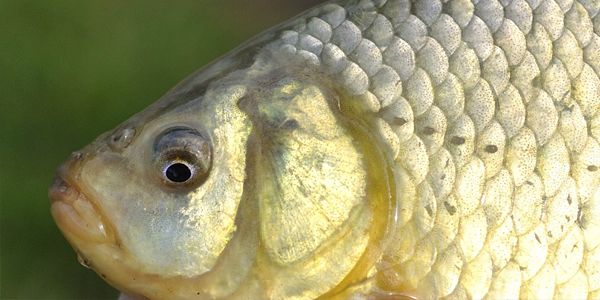
Where to buy and sell Carp, lowest (cheapest) and highest price.
check offers buy sell CarpToday price for CarpCarp wholesale prices 2022
The Current commodity price of Carp per kg, pound in the world in the global markets
carp 750g-1000g catty
carp >1000g catty
crucian carp 100g-150g catty
crucian carp 200g-250g catty
crucian carp 350g-400g catty
grass carp 750g-1000g catty
grass carp about 1500g catty
grass carp about 5000g catty
silver carp 1000-1500g catty
silver carp >1500g catty
carp 750g-1000g catty
carp >1000g catty
crucian carp 100g-150g catty
crucian carp 200g-250g catty
crucian carp 350g-400g catty
grass carp 750g-1000g catty
grass carp about 1500g catty
grass carp about 5000g catty
silver carp 1000-1500g catty
silver carp >1500g catty
carp 750g-1000g catty
carp >1000g catty
crucian carp 100g-150g catty
crucian carp 200g-250g catty
crucian carp 350g-400g catty
grass carp 750g-1000g catty
grass carp about 1500g catty
grass carp about 5000g catty
What Is Carp Fish and How Does the Global Carp Market Work?
Carp is a group of freshwater fish (mainly from the Cyprinidae family) that anchors high-volume aquaculture in Asia and keeps a strong niche in Central Europe. The global carp market is driven more by local consumption, pond-based farming, and seasonal logistics than by a single world price. For traders and investors, carp behaves like a staple protein commodity whose margins depend on feed grains, energy, water access, biosecurity, and the ability to sell value-added forms beyond live fish.
How the Carp Market Is Defined: Species, Product Forms, and Trade Classification
The first step in any serious carp market analysis is defining what “carp” means in data and in trade contracts. In everyday language, carp often points to common carp (Cyprinus carpio) and its domesticated varieties, including mirror-type forms in Europe. In production statistics, however, “carps” frequently expands into a broader basket of cyprinids, including multiple Asian carp species that dominate global freshwater output. In trade statistics, “carp” can also be a commodity basket rather than a single fish, because customs codes often group several genera under a single code. This matters: when a portal tracks carp prices, it should clarify whether it is tracking live common carp at farm-gate, chilled whole carp, or frozen portions coming from cross-border processing hubs.
Commodity definition becomes more concrete when you align with customs nomenclature used in international trade. In the Harmonized System, “fresh or chilled carp” is defined as a code that explicitly lists multiple carp species and genera, not just one. That same bundle effect appears again for some processed categories where carp sits alongside other freshwater fish types in a shared subheading, which can dilute precision if you only look at top-level totals without reading the product scope.
For market intelligence and procurement, it helps to segment carp into product forms that map to real-world price formation:
- Live carp, common in Central European Christmas peak markets and in some specialty diaspora channels: the price is highly seasonal and logistics-intensive, with quality perceived in liveliness, handling, and freshness windows.
- Fresh/chilled whole carp: closer to a conventional seafood cold-chain product, but still sensitive to shelf-life and sensory quality.
- Frozen whole carp, frozen portions, and fish meat excluding fillets: more scalable across distance, more compatible with standardized trade flows, and often the form that appears in import unit values and containerized trading patterns.
- Fillets and value-added carp products such as smoked, sliced, or prepared carp: smaller in volume in many markets than staple Asian whole-fish consumption, but often margin-rich and crucial for demand smoothing outside seasonal peaks.
Finally, the carp market sits inside a bigger reality: global seafood is not a single unified exchange-traded commodity, and carp is even more localized than many marine species. Most price discovery happens at farm-gate, regional wholesale points, and retail chains with negotiated margins. That does not make carp untradeable. It makes it a product where the winning strategy is clarity about what you are buying, which species group and form you are trading, and why that form fits the end-market’s logistics and consumer expectations.
Long Run Evolution of the Global Carp Market Since the Mid Twentieth Century
If you want to understand carp from a trader’s lens, you must place it inside the long-run transformation of global fisheries and aquaculture since the mid twentieth century. The most important structural shift is that world seafood supply moved from a wild capture expansion story to an aquaculture productivity story. By the early post-war decades, capture fisheries grew steadily. Later, biological and regulatory limits constrained expansion, while aquaculture scaled rapidly. A clear milestone is that total fisheries and aquaculture production reached a new record level in the early twenty-first century, and by the early 2020s, farmed aquatic animals reached a level comparable to captured volumes.
In the early 2020s, the global system reached a record total output level, including algae, while aquaculture produced roughly half of all aquatic animal volume. This matters for carp because carp is largely an inland freshwater species complex, and inland aquaculture is one of the fastest paths to expand animal protein supply in countries with suitable land-water systems. Inland aquaculture is also structurally different from offshore cages: it is more tightly linked to agriculture through land use, water management, and especially feed input economics.
Why does carp sit at the center of this transformation rather than at the margins? Because many carp species thrive in pond systems, can be integrated into multi-species farming, and can convert relatively affordable feeds and natural pond productivity into edible protein. As a result, carp and related cyprinids are consistently reported among the largest aquaculture species groups by volume, and they show up as the leading group by production share in recent global snapshots.
The long-run timeline also explains the geography of carp. Aquaculture is regionally concentrated, with Asia dominating global output by volume. This is not a footnote. It is the market’s core. It shapes everything from technology adoption to trade patterns. When production is concentrated in regions where carp is a staple food fish, much of the output stays domestic, and the global carp market becomes a layered system: a huge domestic-and-regional market, mainly in Asia, plus a smaller but strategically important cross-border market, including live carp and processed carp into specific import niches.
For investors, the long-run lesson is that carp is embedded in the growth logic of aquaculture itself. Aquaculture has expanded from a far smaller base in the late twentieth century to a record level by the early 2020s, with multi-decade growth driven by demand, improved distribution, and income dynamics that supported rising aquatic food consumption. Carp is not merely another fish. It is one of the load-bearing pillars of freshwater aquaculture, which is why carp’s outlook is tied to fundamental food-system themes rather than to fashion-driven consumer cycles.
Global Carp Production Today: Where Carp Is Farmed and Who Leads
In current global aquaculture structure, carp-related species are not a niche. They are among the largest animal food outputs on Earth. One way to see this is through the top aquaculture species lists: multiple carp species appear with multi-million-ton annual volumes. In recent global production snapshots, grass carp and silver carp are each measured in the mid-single-digit millions of tonnes, and other carp species, including catla and other cyprinids, also appear among the top global species by farmed quantity. These are not marginal numbers. They place carp directly in the same volume universe as the most important farmed finfish globally.
Even within carp, there is an important segmentation for market watchers: the carp complex, meaning carps, barbels, and other cyprinids, is one macro-basket; common carp is a major single species within that basket; and then you have the large Asian carp subcomplex, including grass carp, silver carp, bighead carp, and others. Official overviews position carps and related cyprinids as the leading aquaculture species group by share in the early 2020s. Separate evidence streams from FAO-linked factsheets and recent analyses report this group at tens of millions of tonnes in a single year, reflecting both scale and concentration.
Common carp alone remains a heavyweight product. Recent global aquaculture production figures for common carp show output in the low single-digit millions of tonnes, with year-to-year variation that reflects both market and production conditions. In practical terms, common carp is one of the world’s major farmed freshwater fish, but it shares the carp spotlight with other carp species that can exceed it in volume depending on the year and classification lens.
Geographically, production concentration is the defining characteristic. Aquaculture output is highly concentrated in Asia by volume, a pattern repeatedly reported in global summaries. Within Asian output, the largest producing countries dominate global totals. Among the countries covered by recent fisheries reviews, China accounts for the largest share of aquaculture volume and value in the reported dataset, far ahead of other major producers such as India and Viet Nam. While each dataset has its own coverage limits, the direction is consistent with wider sector reporting: aquaculture is dominated by a small number of producers, and carp species thrive in those production systems.
For a carp-specific country lens, research that compiles FishStat-based production data for common carp highlights Asia as the dominant producing region and places China as the leading country for common carp aquaculture by a wide margin, with other regions far smaller. This creates a two-market reality: a massive domestic Asian carp market with huge internal distribution, and a set of smaller specialized markets elsewhere, particularly in Europe, where carp is culturally important and sold in specific product forms, including live fish.
Europe deserves a separate mention because it shows how carp can be economically relevant even when it is not globally dominant in raw tonnage. In the European Union, carp is a small share of total fish and aquaculture consumption by volume, yet it forms a recognizable market segment with its own seasonal and cultural pattern. This European segment matters for traders because it is more trade-exposed in some product forms, especially live carp trade within and around Central Europe.
Carp Prices: Historical Patterns, Regional Benchmarks, and What Moves the Market
There is no single world carp price comparable to a globally quoted banana benchmark. Carp pricing is fragmented because production is dispersed across many inland farms, product forms differ dramatically, and consumer preferences vary by region and season. That said, you can still build a robust carp price framework by combining three layers: long-run global seafood price proxies, regional carp benchmark prices such as farm-gate and first-sale, and cost-driver analytics such as feed, energy, financing, and biological losses.
For the global proxy layer, the FAO provides a Fish Price Index that measures monthly changes in international seafood prices using a basket approach, with a series extending back to the early 1990s. This index is not carp-specific, but it matters because carp competes with other proteins and fish categories. When overall fish prices rise, carp can benefit as a substitute protein in price-sensitive segments, while in premium segments carp may still face demand constraints unrelated to broader seafood inflation. Methodologically, research on global seafood price indices notes that trade unit values can proxy broader seafood price dynamics where domestic prices are hard to observe at scale.
The regional benchmark layer is where carp becomes tangible. In Europe, market monitoring illustrates that first-sale prices for common carp differ materially by country, reflecting cost structures, retail structure, market maturity, and product positioning. Recent multi-month observations show a weighted average first-sales price for common carp in France meaningfully above Spain’s. This illustrates how the same species can command very different price levels even within the same broad region. In Central Europe, industry and market studies also document that carp prices can show strong seasonal peaks and that processed forms such as gutted, sliced, or filleted carp can command step-up pricing relative to live fish.
From a long-run perspective, carp price behavior is best understood as a tug-of-war between productivity gains and input cost shocks. Over decades, aquaculture technology, pond management, and genetics improved output and predictability, forces that can stabilize or reduce real prices. Against that, carp has recurring exposure to input-cost cycles: feed grains, oil and energy, labor costs, and farm financing. When feed becomes expensive, margins tighten quickly because feed is often the largest variable cost item, and attempts to feed less can lengthen cycles and increase biological risk. Modern economic analyses of carp systems explicitly highlight feed as a dominant cost driver and underline how strategy choices can shift the risk-return profile of carp farming.
Short shocks and disruptions also matter for prices. During the COVID-era period, multiple studies and sector summaries observed disruptions to harvesting schedules, marketing channels, logistics, and processing labor, with downstream effects on pricing and profitability in aquaculture value chains. Carp, especially where sold live or through physical markets, is particularly exposed to such bottlenecks.
In practice, traders and investors usually want a price dashboard rather than a single number. A workable dashboard for carp typically includes farm-gate live carp by size class, first-sale wholesale prices, processed benchmarks such as gutted, slices, or fillets, import unit values for frozen products, and a feed-cost index proxy based on maize, soy, or compound feed. This is the carp equivalent of tracking bananas across origins, packaging formats, freight, and destination market prices, except carp adds the biological layer, where survival, growth rate, and health events can transform supply in ways fruit cannot.
Export and Import of Carp: Trade Routes, Product Standards, and Logistics
Carp trade is a paradox. Global production is enormous, but international trade in carp is smaller relative to production than for many marine species, largely because carp is heavily consumed domestically in key producing countries and is often marketed in forms that do not travel easily, especially live fish in peak seasons. Yet trade is still strategically important because it connects surplus regions to deficit niches, creates price reference points via import unit values, and amplifies the role of standards, disease controls, and logistics competency.
To interpret carp trade correctly, start with classification. Under HS definitions used in many trade datasets, fresh or chilled carp is explicitly defined as a broad list of carp species, not only common carp, for customs purposes. Processed categories can also combine carp with other freshwater fish categories in a shared subheading, which means that some carp-related trade flows are embedded in mixed product totals unless you drill down into a more granular tariff line.
Live carp trade is a particularly visible segment because it is easier to isolate in some trade datasets and because it matches real commercial practice in parts of Europe. Global trade statistics compiled from UN Comtrade via WITS show that the leading exporters of live carp include China and several Central European countries, with quantities in the tens of millions of kilograms for the top exporter. Within Europe, imports of live carp into the European Union are comparatively small in absolute value and tonnage relative to total seafood trade, but they are meaningful for seasonal supply balancing and for niche consumer channels.
At a country level, these flows become even more practical. For example, Poland’s live carp exports are small in absolute value compared with larger seafood categories, and they concentrate into a small number of destinations. This illustrates how live carp trade tends to be regional and relationship-driven rather than globally dispersed. That pattern is consistent with the logistics reality: live fish shipments require oxygenation, temperature control, compliance documentation, mortality risk management, and fast delivery, all of which push trade toward geographically closer partners and stable seasonal programs.
Frozen carp and frozen carp portions represent a different trade logic: they are more compatible with container shipping, cold storage, and inventory-based retailing. Trade intelligence summaries for frozen carp identify leading exporting origins in recent years that include Myanmar and Thailand among top exporters by value in some recent year snapshots. Even when such rankings vary from year to year, the strategic point remains stable: frozen forms globalize carp more effectively than live forms, and they are the entry point for many new markets that do not have a cultural tradition of buying live carp.
Standardization and compliance increasingly decide market access. This includes food safety controls, residue monitoring, disease-related movement rules, particularly for live fish, and retailer-driven specifications on size, handling, and packaging. The most investable carp supply chains are usually those that can produce consistent grades, demonstrate traceability, and shift volume between channels, including live, chilled, frozen, and processed, when demand changes. In other words, carp trade rewards the same operational strengths as fruit trade: consistency, cold-chain discipline, and the ability to hit a narrow quality window, plus the added complexity of animal health.
How Carp Is Used: Food, Processing, and Non Food Applications
Carp’s demand base is broader than many market summaries suggest, because carp serves several distinct value propositions across regions. In its largest markets, carp is primarily a food fish sold whole or in pieces and integrated into everyday diets. In parts of Central and Eastern Europe, carp also carries a seasonal cultural role that concentrates purchases into a short period, creating intense peaks in harvesting, distribution, and retail handling. In these seasonal markets, supply chain efficiency and inventory planning can matter as much as annual production volume for profitability.
From an industry viewpoint, carp demand can be structured into a few commercially meaningful end-use lanes. First is commodity food consumption, including fresh, live, chilled, and frozen. Second is value-added processing, which aims to overcome carp’s seasonality and convenience barrier in some markets. Market studies of European aquaculture note clear strategies where producers develop processed carp products such as steaks, smoked carp, fillets, and sliced carp to maintain market share and attract younger consumers who demand convenience. This is a critical message for investors: carp’s upside in mature markets often depends less on growing pond area and more on expanding the product set that fits modern retail behavior.
Third is service demand, where carp is produced not only for eating but for stocking and recreational uses. European market analysis also describes that a portion of live carp production can be allocated to supplying recreational fishing ponds, a lane that grows when leisure fishing expands and when operators want reliable stocking sizes. Fourth is nonfood and ancillary uses across aquaculture systems, including the broader category of aquaculture outputs used for animal feed ingredients, bait, and other applications, which is recognized in broad sector overviews of aquaculture’s nonfood roles.
There is also an adjacent market that shapes perception and sometimes biosecurity policy: ornamental carp, especially koi-type fish, and the movement of live fish for ornamental or leisure markets. Even when ornamental channels are not the core tonnage driver of carp for food, they can influence disease management practices and movement controls because live fish transport is a known pathway for spreading pathogens. Investor-grade carp value chains therefore treat health controls as a market-access requirement, not as a technical afterthought.
For traders, the most actionable point is that carp demand is not monolithic. It is segmented by how the fish is bought, such as live versus chilled versus frozen, and why it is bought, such as staple protein versus seasonal tradition versus convenience product. The best market strategies match product form to demand lane: live fish programs for seasonal peaks, chilled whole fish for fresh counters, frozen portions for price-sensitive and logistics-ready importers, and processed items for premium or convenience-driven retail.
Technologies Shaping Carp Aquaculture: Genetics, Feed, Systems, and Biosecurity
Carp production technology is often misunderstood because outsiders associate carp with traditional ponds and assume the sector is low-tech. In reality, carp farming spans a wide technology range, from extensive pond systems relying heavily on natural productivity to semi-intensive and intensive systems using formulated feeds, aeration, careful water quality management, and shortened cycles to reduce risk and improve capital turnover. Recent economic research on carp farming in Europe, for instance, evaluates strategies that blend closed-system nursery phases with pond grow-out to reduce losses, shorten cycles, and improve predictability, explicitly modeling costs and showing how system design changes profitability and risk.
Feed is the central lever. In many carp systems, feed is the largest cost item and the most direct pathway to controlling growth rates, harvest timing, and feed conversion efficiency. What makes carp strategically important for food security is that several carp species can utilize a mix of natural pond productivity and lower-cost feed inputs more effectively than many carnivorous fish, supporting high output volumes at comparatively accessible production costs. That advantage, however, is not automatic. It depends on pond ecology management, balanced stocking, and disciplined feeding that avoids water quality degradation.
Production systems are also becoming more diversified and more agriculture-integrated. In Asia, carp is frequently farmed in polyculture systems where different species occupy different ecological niches in the pond, improving total output per unit area and stabilizing production. In other contexts, carp can be integrated into broader farming landscapes where water, nutrient flows, and land use are co-managed. This is one reason carp aligns naturally with investor themes like efficient protein and resource-smart food systems, provided environmental impacts such as nutrient runoff and water-use conflicts are managed and regulated.
Biosecurity is the other decisive technology frontier. Carp is exposed to multiple infectious diseases that can cause mortality, reduce growth, and trigger movement controls. A practical example is carp edema virus, also known in koi contexts, which is recognized in international animal health references as affecting common carp and koi strains and is discussed in terms of host range and transmission considerations. Disease risk is not only a farm-level problem. It is a market problem because it can change harvest timing, increase mortality during transport, especially for live fish, and influence buyer requirements for documentation and sourcing.
Processing and cold-chain technology is the final technology lever that directly links to price and demand. Market analyses note that producers develop value-added products and local processing units to offer semi-prepared forms such as steaks, fillets, and smoked products that are less sensitive to the logistics constraints of live carp and that can distribute demand more evenly during the year. In commodity terms, this is carp’s version of moving from a raw commodity to a branded and retail-ready product: higher control, higher value capture, and a better ability to match modern retail demand patterns.
Outlook for the Carp Market: Opportunities, Risks, and Scenarios for Traders and Investors
The outlook for the global carp market is best described as structurally resilient with regionally uneven upside. Carp sits inside a global aquaculture sector that has reached record production levels and is expected to remain central to meeting demand for aquatic foods as capture fisheries face biological limits and sustainability constraints. The core demand engine, population growth, income shifts, and the search for efficient protein, remains supportive of high-volume aquaculture staples, and carps are among the highest-volume staples.
For investors, upside tends to come from efficiency, risk reduction, and value capture rather than from simply adding ponds. The most promising opportunities cluster in a few areas:
- Value-added processing to reduce seasonality and expand addressable consumers, especially portions, fillets, and smoked products, particularly in European and diaspora markets where convenience is decisive.
- Operational productivity via improved nursery strategies, oxygen management, feeding discipline, and cycle optimization to increase predictability and asset turnover.
- Biosecurity and quality assurance as a competitive moat: the ability to document health management and deliver consistent quality can unlock higher-value channels and reduce catastrophic loss risk.
- Trade-enabled formats such as frozen portions and standardized chilled products that allow carp to reach markets without a tradition of buying live fish, thereby scaling demand beyond cultural niches.
The main threats are equally clear and, in many cases, more quantifiable than the opportunities. First is input-cost volatility, especially feed and energy, which can compress margins quickly in semi-intensive and intensive systems. Second is disease and mortality risk, which is particularly punishing for live-fish supply chains where stress and handling can amplify losses. Third is environmental and regulatory pressure: water-use conflicts, nutrient discharge controls, and movement restrictions can raise costs or restrict expansion, especially near urbanizing regions. Fourth is market acceptance risk in regions where carp is not culturally embedded; expansion there depends on product innovation, branding, and quality consistency rather than on raw supply availability.
For fruit traders and agricultural investors entering carp analysis, one strategic advantage is that carp’s economics are legible in a familiar way. Like bananas, carp margins are shaped by a chain of measurable steps: production cost, pack or processing choice, logistics friction, quality losses, and buyer specification risk. The difference is biological variability. Carp production introduces uncertainty through growth rates, mortality, and health status, and that uncertainty is precisely why the highest-performing carp businesses increasingly look like integrated agri-food operators rather than fish farmers in the narrow sense.
In scenario terms, the most plausible medium-term path is a quality and format upgrade market: stable or slowly rising volumes in mature regions, continued high-volume dominance in Asian domestic markets, and the gradual expansion of frozen and processed carp trade into niche import markets. The bullish scenario adds accelerated value-added innovation and stronger retail adoption beyond seasonal peaks. The bearish scenario is driven by disease shocks, sustained feed inflation, or policy constraints that reduce profitability and capital investment. Regardless of scenario, the center of gravity remains the same: carp is a cornerstone of freshwater aquaculture, and freshwater aquaculture remains a cornerstone of global animal protein growth.
Download our new
Husfarm App
Stay up to date with the current prieces of agricultural products all over the world.


Do you want to sell agricultural products?
Are you an Agricultural processor looking for high-quality products to buy?
Post an ad for FREE!